Atlantic Calibration
Research and Living Archive
Atlantic Calibration is a descendant-led artist research practice and living archive moving through Britain, Barbados and Nigeria.
Through film, sound, writing, fieldwork, family archive, embodied noticing, ritual and community practice, the project traces how Black Atlantic histories live in bodies, landscapes, objects, institutions, water, memory and ancestral relation.
College Savannah Ancestral Lands
College Savannah Ancestral Lands is the first site specific film within Atlantic Calibration.
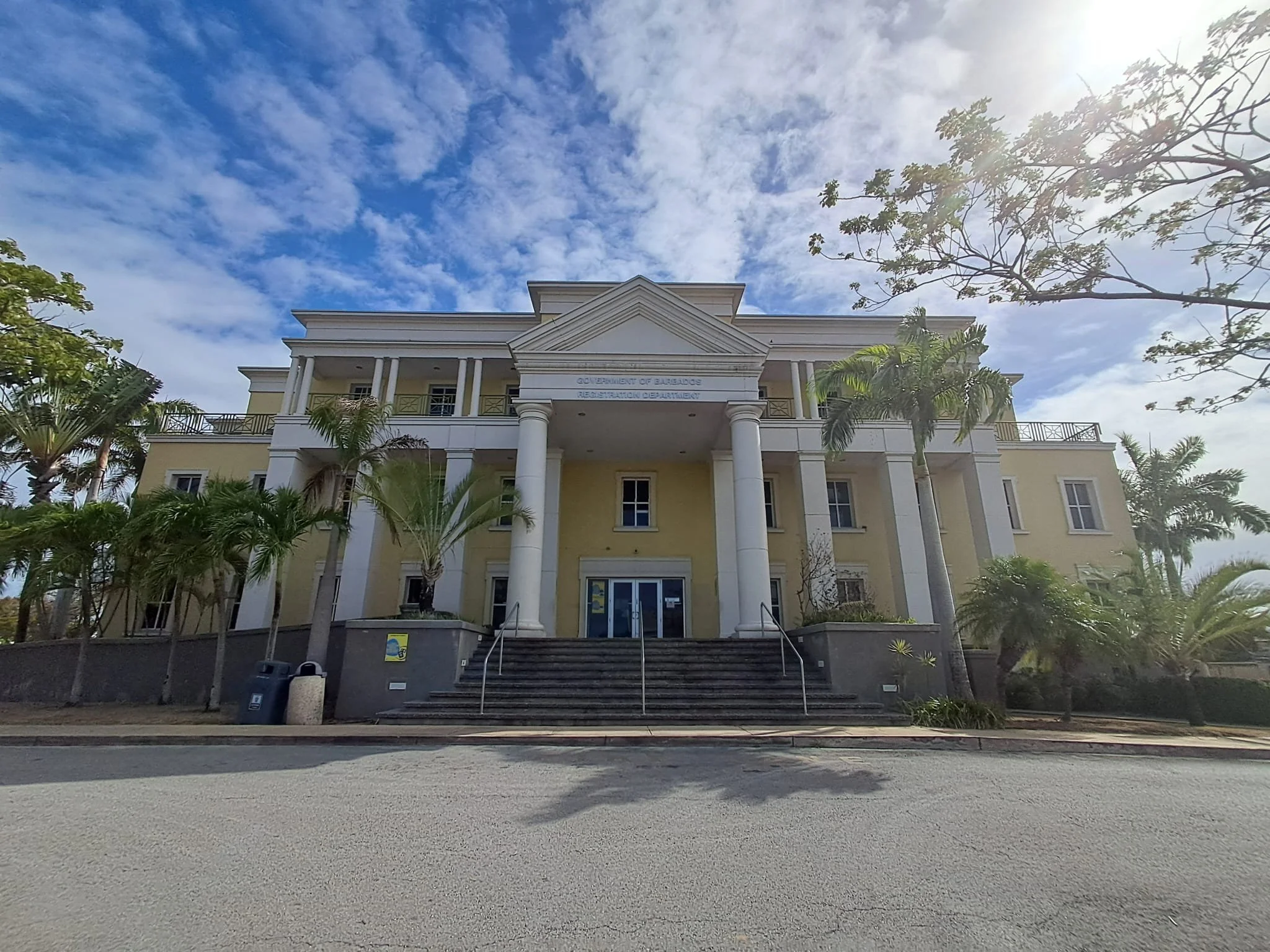
Filmed in Barbados in 2026, the work follows a journey from Bridgetown to College Savannah, tracing family memory, ancestral land, migration, water, archive and spiral time.
Through field footage, family photographs, old transport routes, the family house, the standpipe, limestone, coral, wind, sea and The Puff, the film centres The Adventures of a Caribbean Nurse, the memoir of Stella Newton Okoro, the artist’s grandmother.
It asks what land remembers when a family home stands empty, but the ground, water and ancestral presence remain alive.
College Savannah Ancestral Lands, 2026
Film by Ima Aura
Barbados and United Kingdom
Duration: 8 minutes 1 second
What is Atlantic Calibration
Atlantic Calibration is a descendant-led artist research practice and living archive tracing relation, perception, memory and repair across Black Atlantic worlds.
The work moves through Britain, Barbados and Nigeria, not as separate locations, but as related points in an inherited field.
Britain holds imperial archives, museums, universities, diagnostic systems, paperwork and the weather of racialised life.
Barbados holds family memory, plantation afterlives, burial grounds, water, land, lineages and the ongoing presence of return.
Nigeria holds Ibibio ancestry, names, language, spirit, rupture, longing and unfinished relation.
Atlantic Calibration asks what happens when these places are not treated as background, but as active forces. What does the body know when it moves between them? What becomes possible near the sea? What becomes heavy inside institutions? What memories are held in objects, churches, docks, family stories, street signs, graves, shells, coral, records, dreams and silence?
At its centre, Atlantic Calibration is a practice of noticing, gathering and recalibrating. It works with film, sound, writing, fieldwork, family archive, embodied knowledge, ritual, dreamwork and community practice to trace how histories live on, how they move through us, and what forms of repair they may be asking for.
Current Research Strands
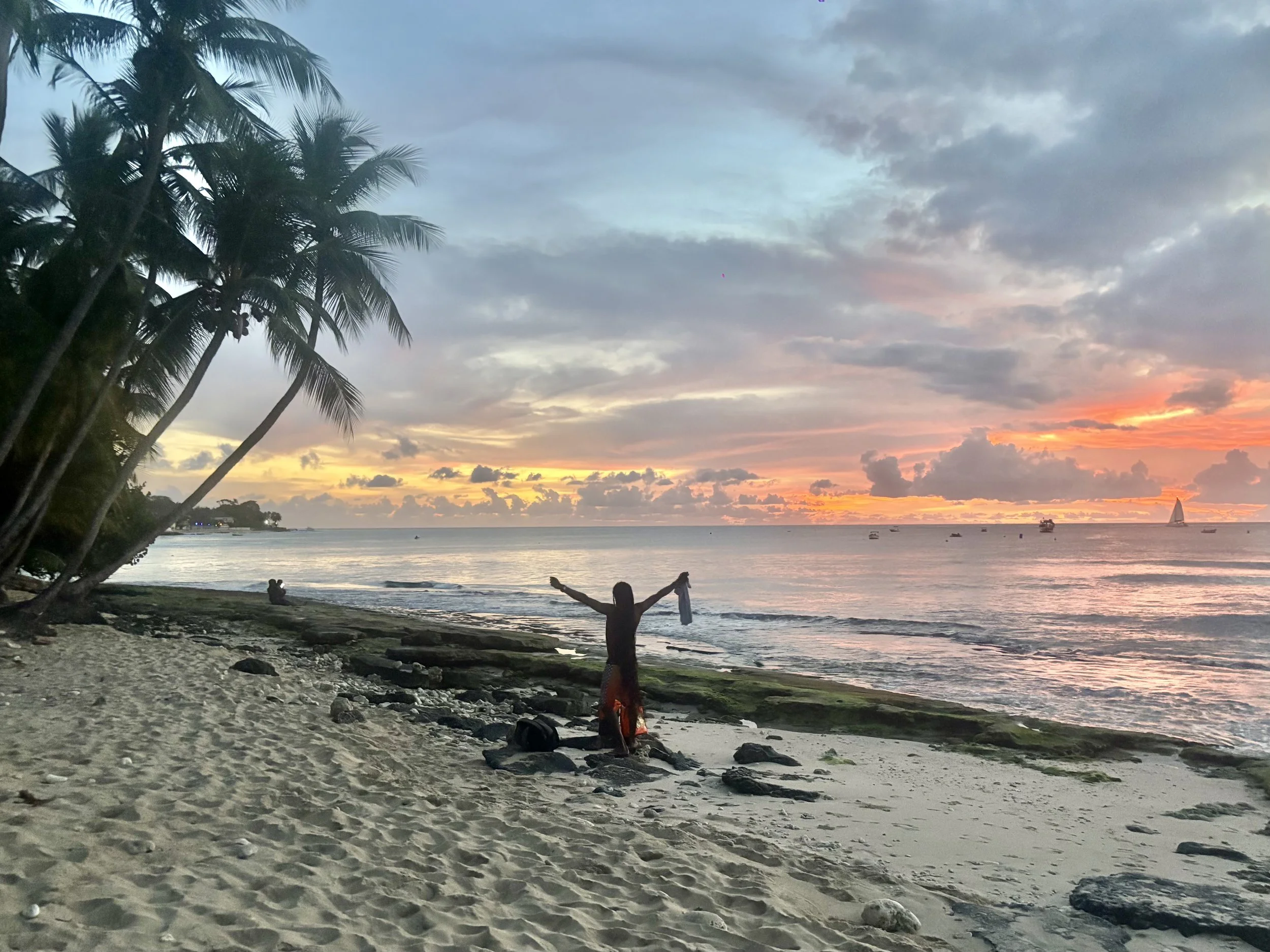
Atlantic Calibration is developing through several connected research strands. These are not separate projects. They are movements within one living archive.
College Savannah and Ancestral Land
The first site specific work begins in College Savannah, Barbados. Through film, family photographs, memoir, field footage, route tracing, water, land and coastal memory, this strand asks what ancestral land remembers, and how family histories continue to live through place.
Restitution and Descendant Repair
Atlantic Calibration is shaped by research into museum restitution, ancestral remains, community healing and the afterlives of colonial collection. This strand asks how descendants, communities and institutions carry the emotional, spiritual, political and historical weight of archival harm, and what forms of repair are needed beyond policy or display.
Dreamwork and Ontological Justice
An emerging strand explores dreams, ancestral presence, non linear time, embodied knowledge and unseen forms of relation as part of decolonial and reparative practice. This work asks what becomes possible when Black Atlantic ways of knowing are approached as living knowledge systems.
Water and Black Atlantic Memory
Water is central to Atlantic Calibration as memory, method, force, threshold and relation. This strand follows the Atlantic, springs, coastlines, rivers, crossings, offerings and water beings as sites where history, ecology, spirit, movement and survival meet.
Public Space and Colonial Landscape
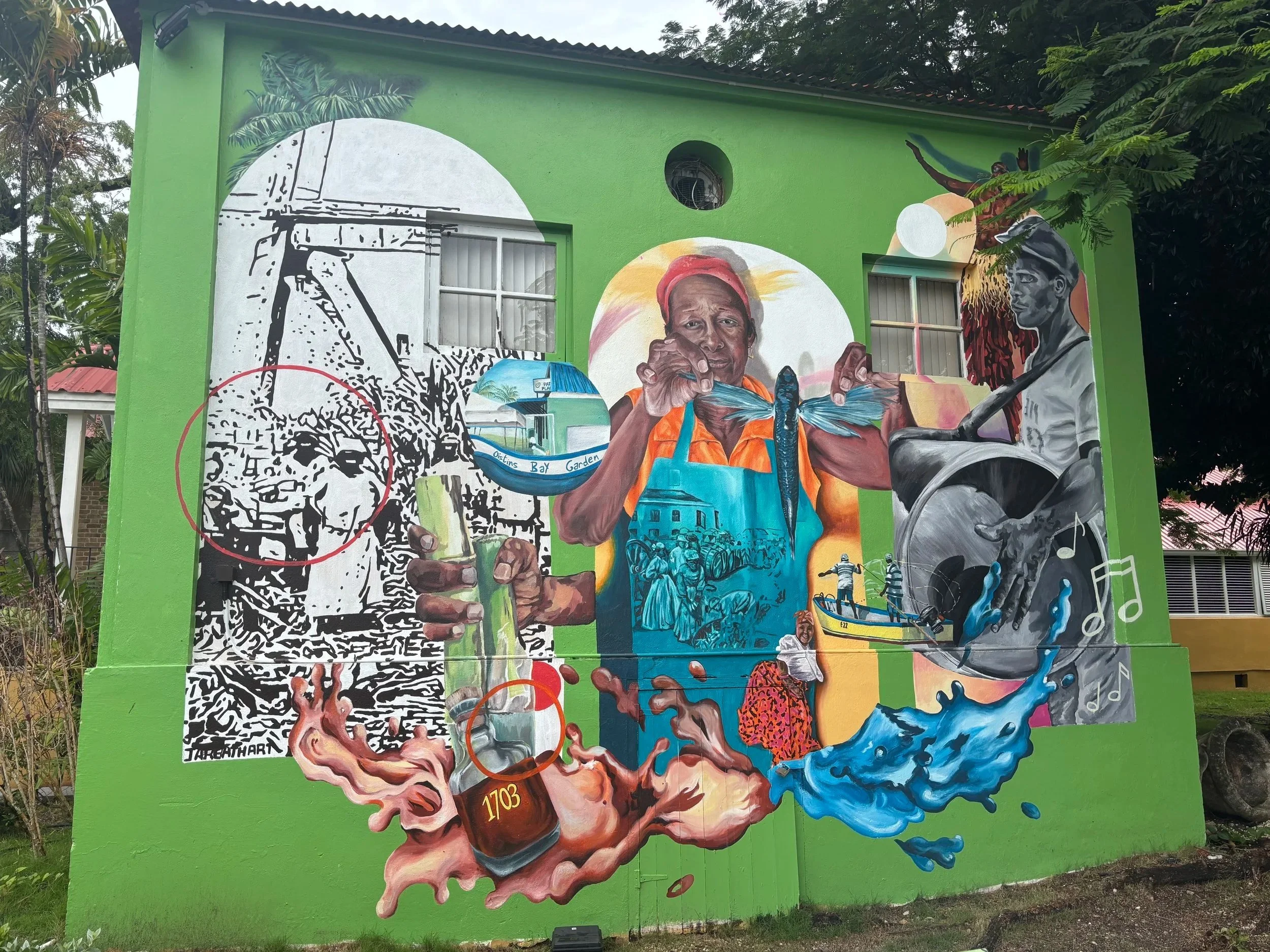
This strand reads public space as archive. Roads, churches, docks, murals, signs, monuments, estates, city surfaces and coastal routes all carry memory. The work asks what colonial landscapes reveal, conceal, soften or refuse, and how descendants might read these spaces differently.
Family Archive and Material Trace
Family photographs, memoirs, objects, names, documents, shells, plants, vessels and gathered materials are part of the living archive. This strand attends to the small and ordinary things through which memory, inheritance and relation continue to speak.
Britain, Barbados and Nigeria
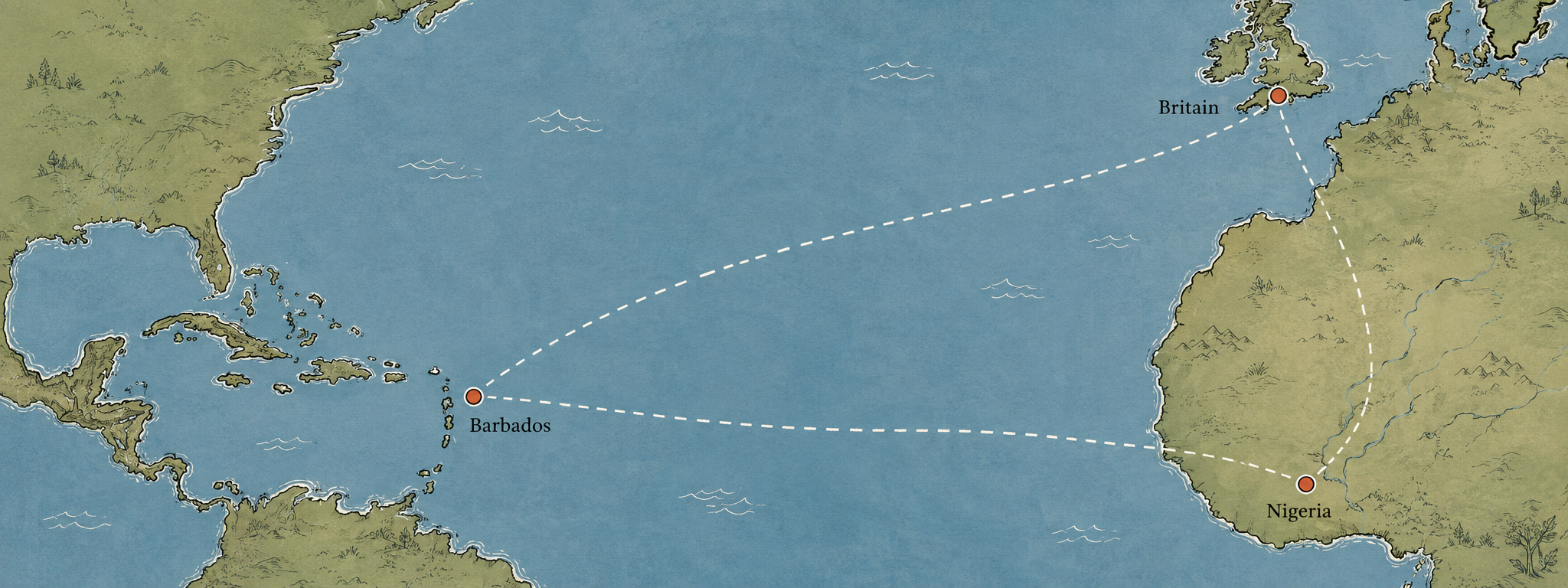
Atlantic Calibration moves through a Black Atlantic triangulation between Britain, Barbados and Nigeria. Britain holds imperial archives, museums and institutional afterlives. Barbados holds ancestral land, family memory and plantation afterlives. Nigeria holds Ibibio ancestry, language, spirit, rupture and future research direction.
Together, these strands ask how histories live on in bodies, landscapes, dreams, archives, objects, water and relation, and what forms of repair they may be asking for.
Barbadian Cultural Memory Collection
This strand gathers essays, field notes, photography, fragments, recordings, objects, archival encounters and autoethnographic writing connected to Barbados, family memory and the wider Black Atlantic.
It moves through land, sea, migration, return, liberation, ritual, repair and sacred holding.
Some materials will become public essays and field notes. Others will remain part of the working archive while they are still being researched, metabolised or protected.
The collection begins from Barbados, but it does not stay there. It opens questions about how cultural memory travels through families, landscapes, objects, water, bodies and ancestral relation.
Methods
Atlantic Calibration works through archival research, family photographs and documents, field recording, film, sound, embodied noticing, dreamwork, ritual, creative practice and descendant led research.
These methods are not separate from each other. They move together as ways of tracing how memory, history and relation live through land, water, body, object, image, sound, language, family archive and ancestral presence.
The archive in this work is not only written. It is also sensory, material, relational and spiritual. It can appear in a photograph, a shoreline, a dream, a gesture, a place name, a family story, a museum record, a remembered feeling, or the body’s response to a site.
Atlantic Calibration treats research as a practice of attention. It asks what can be known through documents, but also what can be felt, carried, witnessed, questioned, offered and returned.
Current and Future Movement
Atlantic Calibration moves through Britain, Barbados and Nigeria as a living field of relation.
Britain holds imperial archives, museums, universities, records, migration histories and the institutional afterlives of empire.
Barbados holds family memory, ancestral land, coastal routes, plantation afterlives, parish histories, water, limestone, coral and return.
Nigeria holds Ibibio ancestry, names, language, spirit, rupture, longing and future research direction.
These places are not separate chapters. They are connected through movement, inheritance, violence, care, migration, memory and the Atlantic itself.
The current phase is grounded in Barbados and Britain, through College Savannah, family archive, restitution research, public memory and museum histories.
From 2027, the project will begin moving more directly towards Nigeria, following family histories, language, spiritual inheritance and unfinished lines of relation.
This movement is not a straight line. It is a triangulation, a crossing, a spiral and a recalibration.
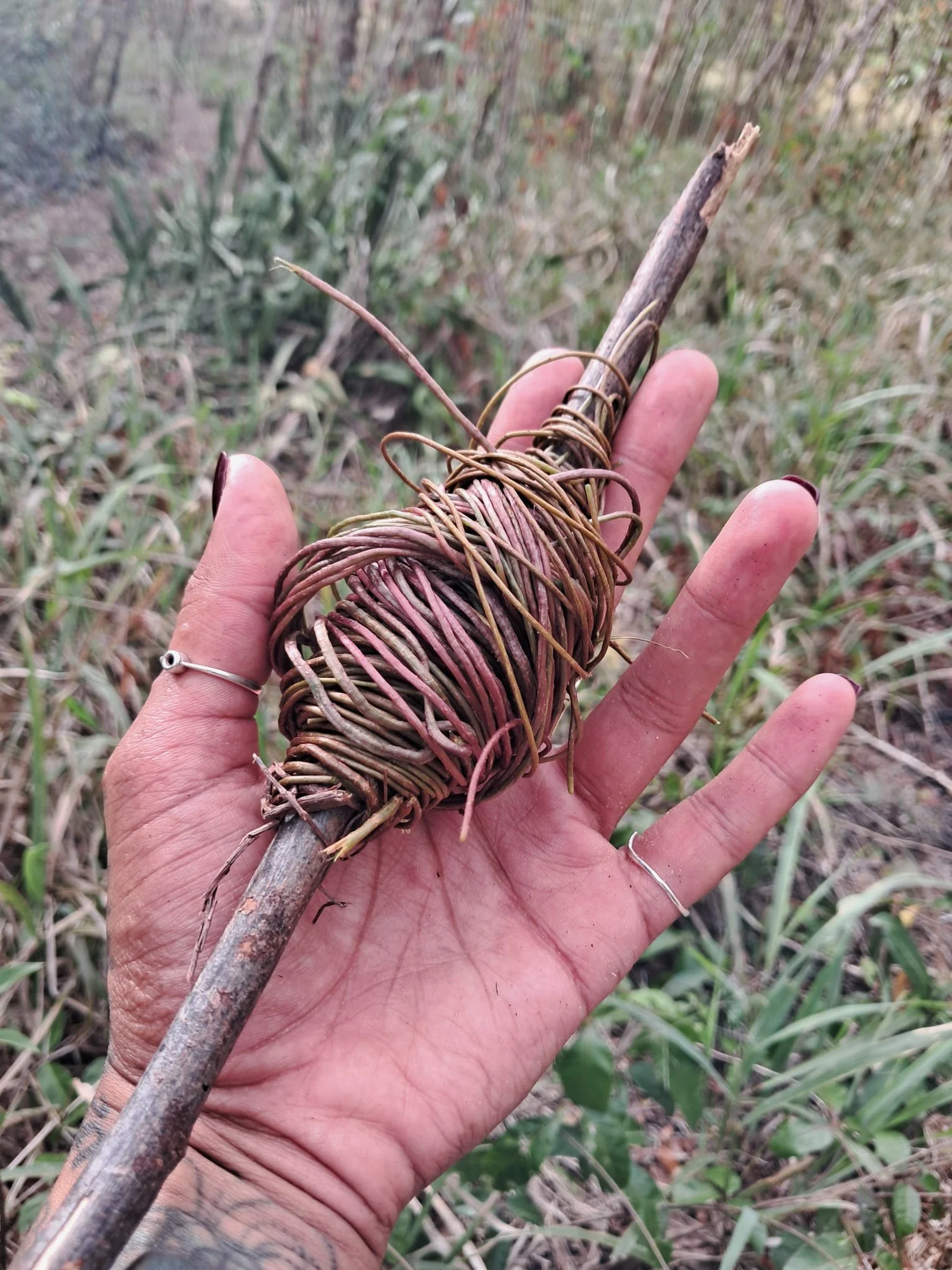
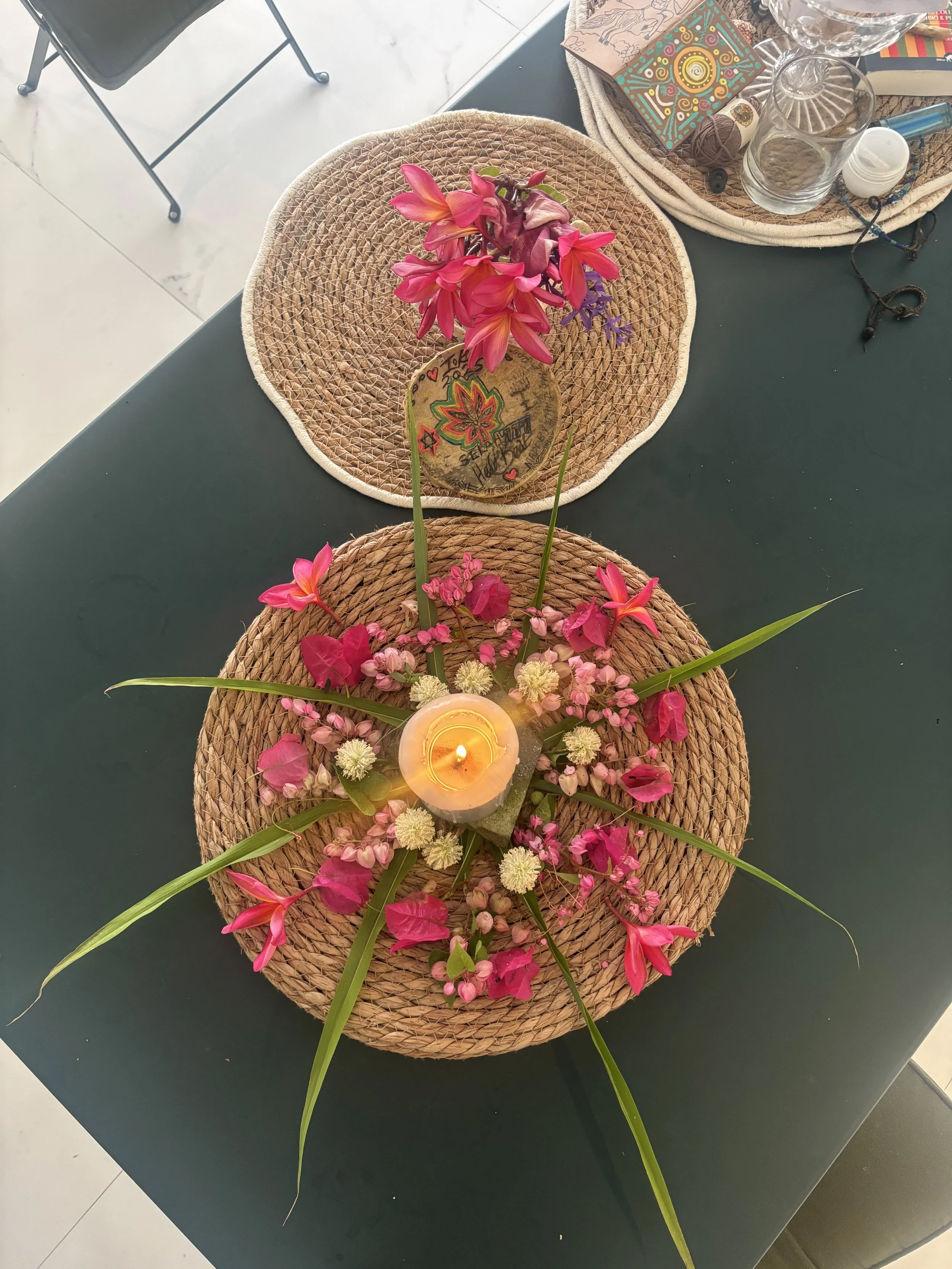
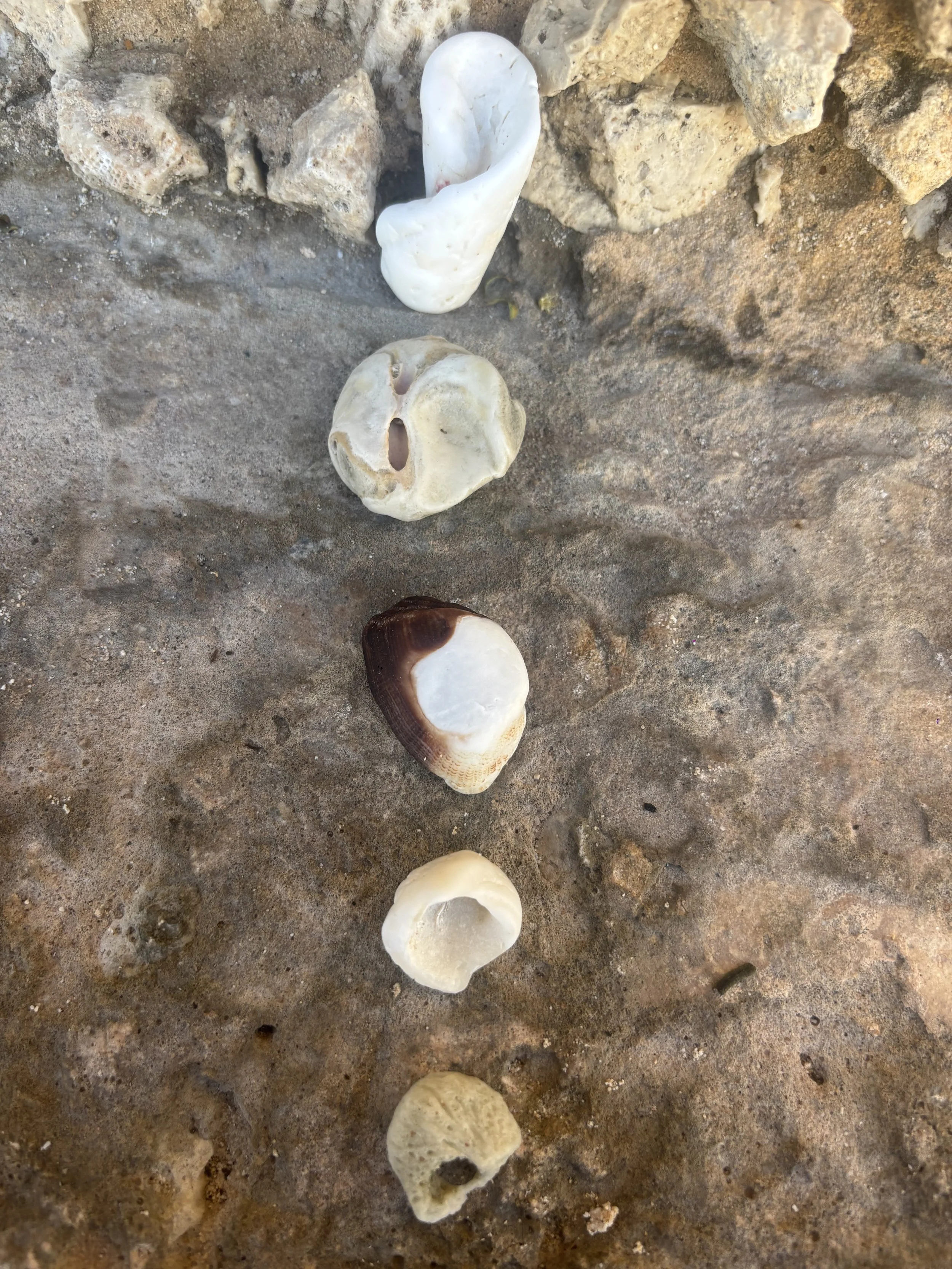
Material Culture, Found Objects and Ritual Trace
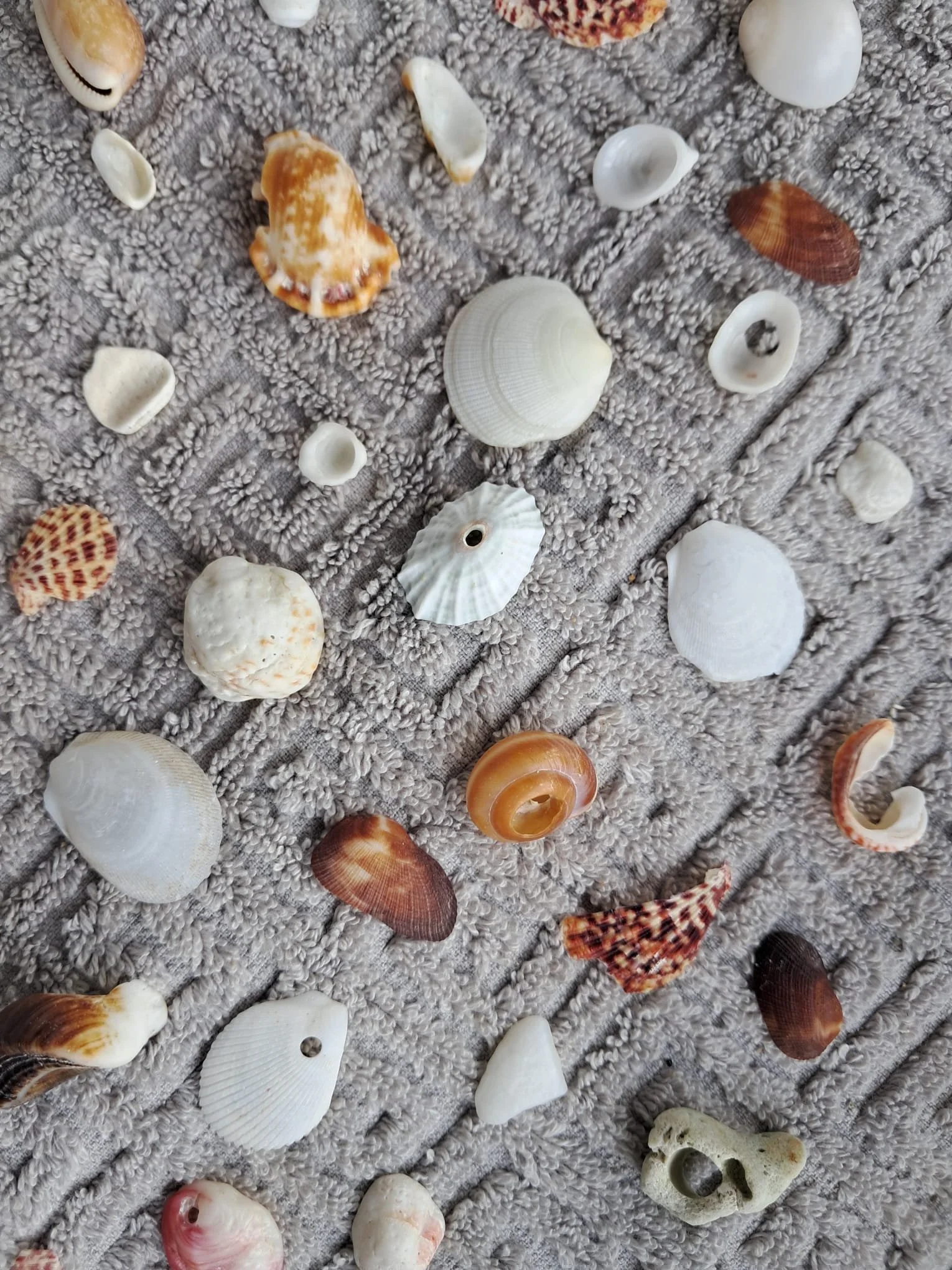
Shells, plants, stones, vessels, flowers, fragments and gathered materials form part of the living archive.
These objects are not decoration. They are traces of relation.
Things found, carried, placed, offered, photographed, remembered and returned to.
They hold questions about land, water, inheritance, attention and care. In Atlantic Calibration, small objects can become anchors. A shell, a stone, a flower, a vessel or a gathered fragment may carry memory, gesture, offering, place and relation.
The Atlantic in Motion
Water is not only setting or symbol in Atlantic Calibration. It is method.
The Atlantic holds rhythm, return, erosion, memory, force, softness and threshold. Its movement teaches how histories swell, split, fold, disappear, return and press against the body.
Across the project, water appears as sea, spring, shoreline, crossing, offering, weather and ancestral presence. It carries movement between Britain, Barbados and Nigeria, but also holds what cannot be carried in words.
The water is not empty. It remembers, conceals, returns, nourishes, destroys and refuses possession.
Public Memory, Colonial Landscape & Resistance
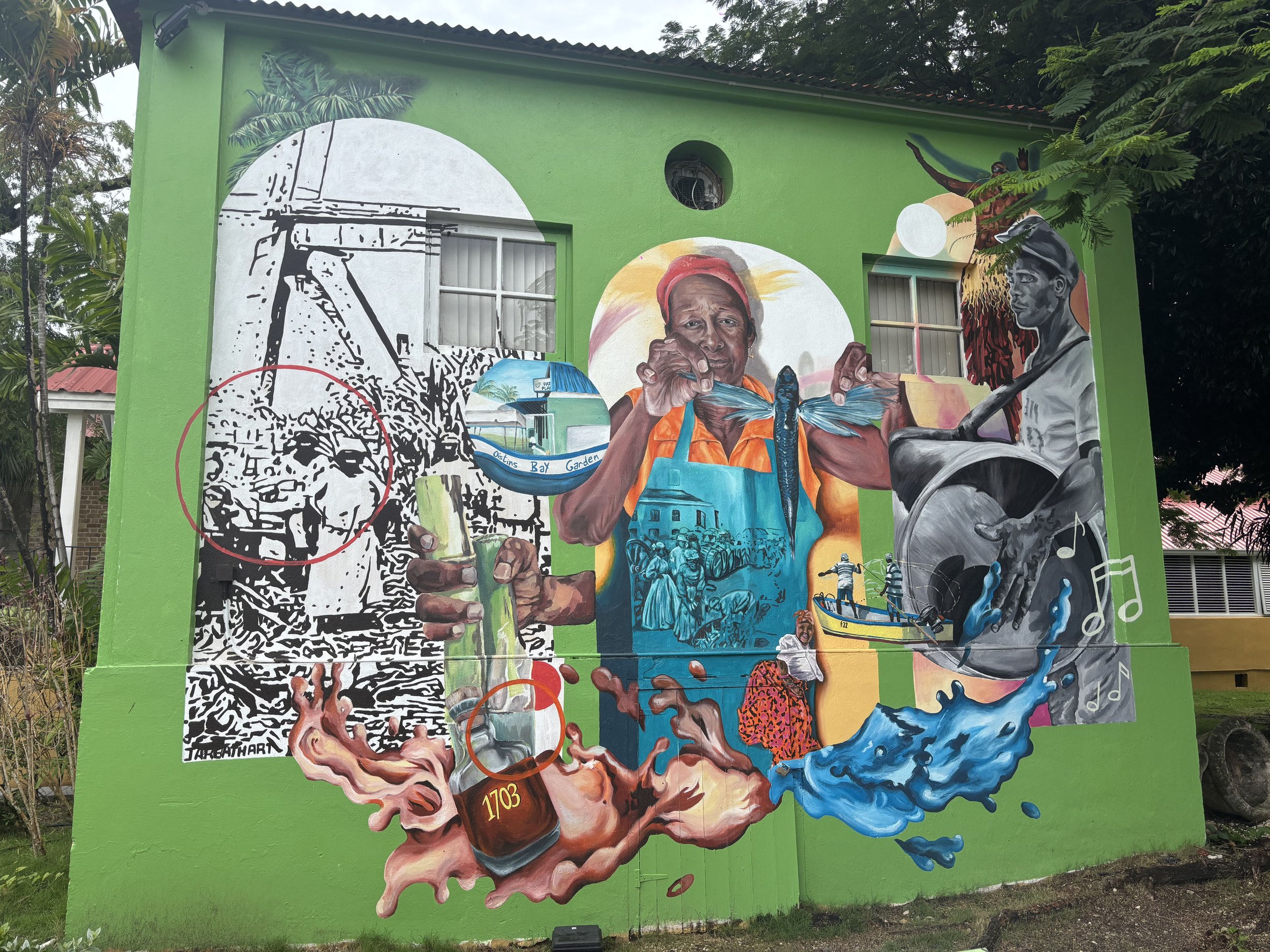
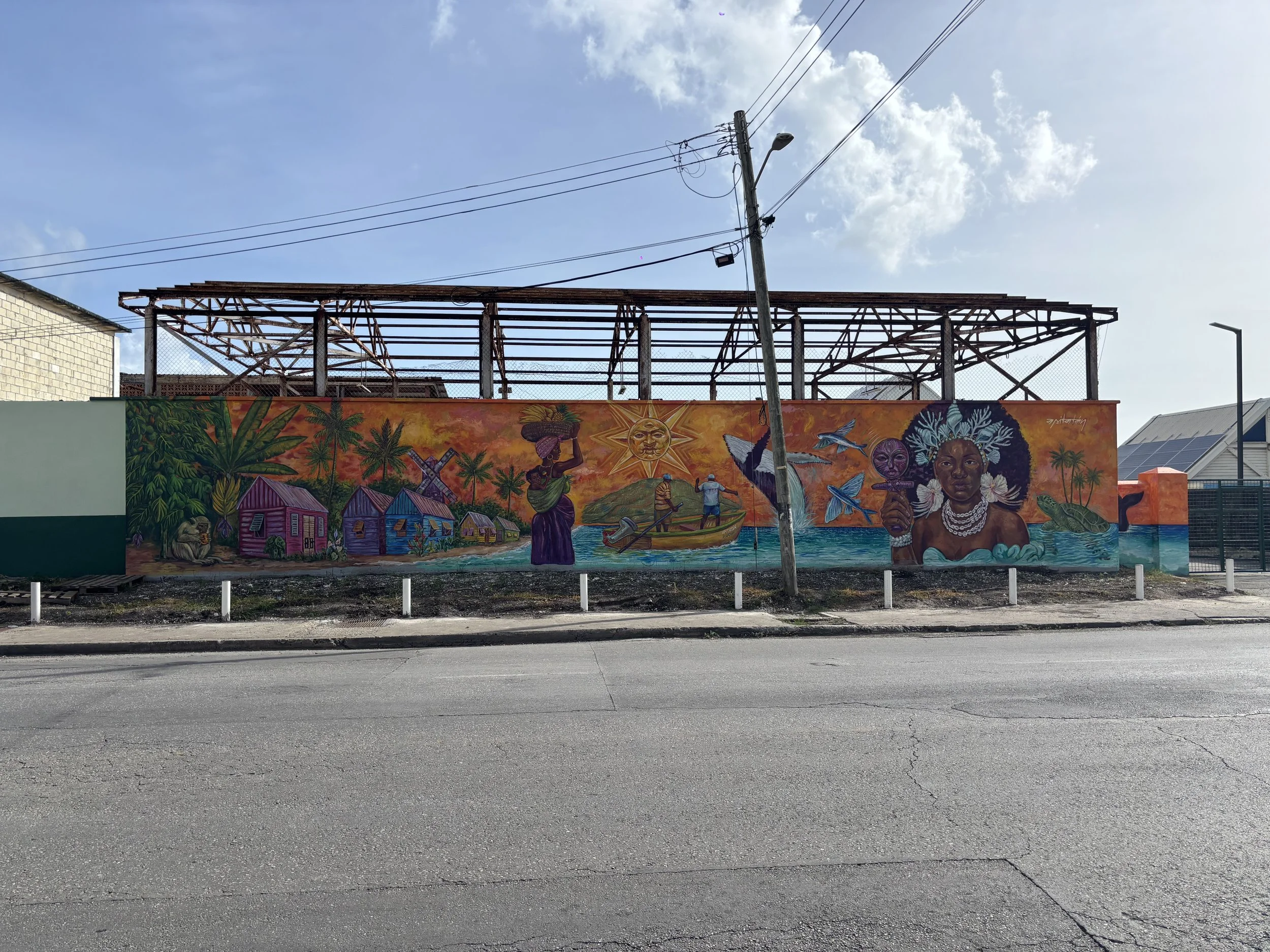
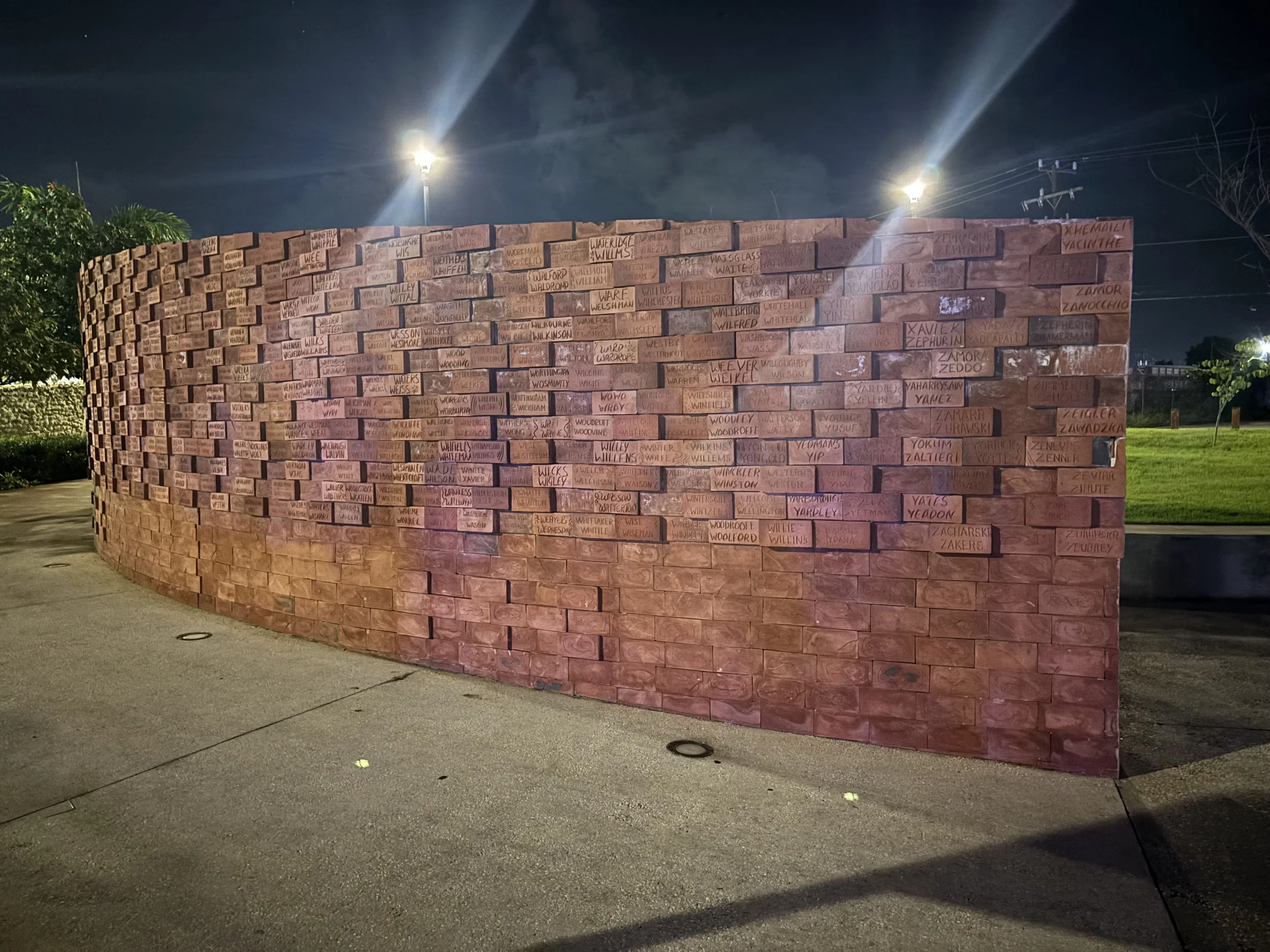
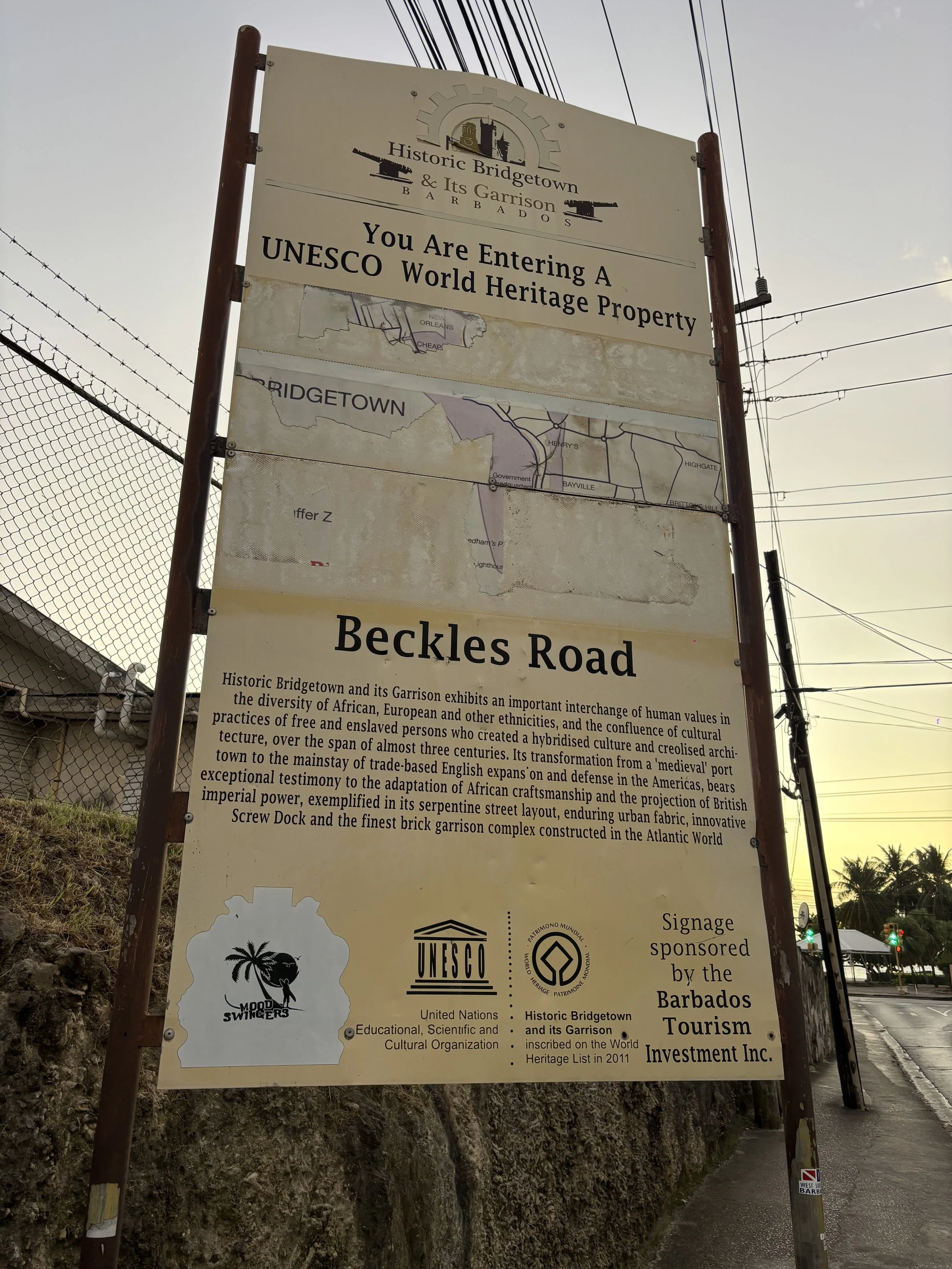
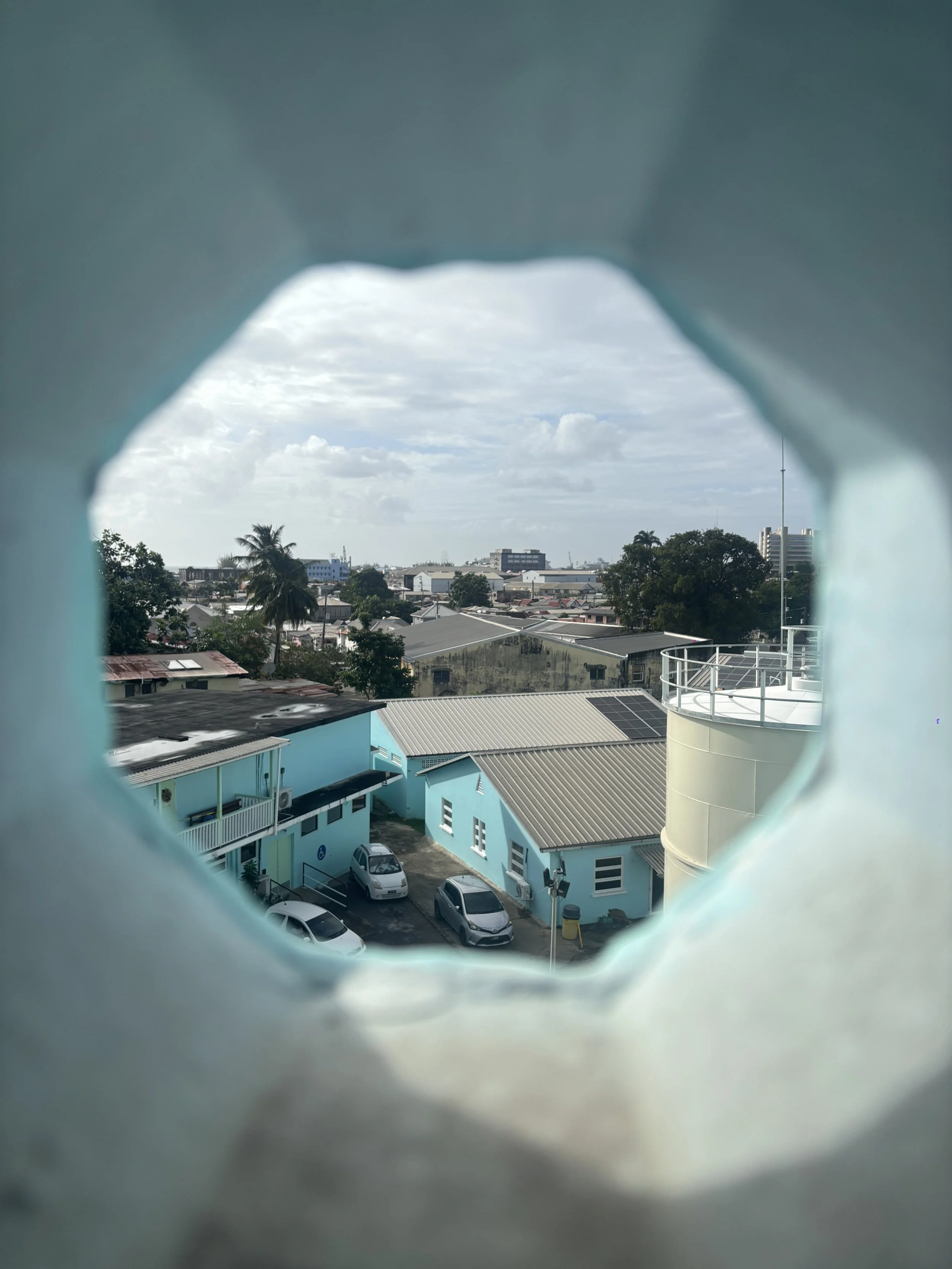
Atlantic Calibration reads public space as part of the archive.
Roads, churches, docks, murals, signs, monuments, estates, city surfaces and coastal routes all carry memory. Some of that memory is named clearly. Some is softened, hidden, displaced or made ordinary.
This strand asks what colonial landscapes reveal, what they conceal, and what remains alive beneath official narratives.
It also asks how descendants read these spaces differently. Through walking, filming, listening, noticing and returning, public space becomes a site of memory, resistance and relation.
Research, Restitution and Community Healing
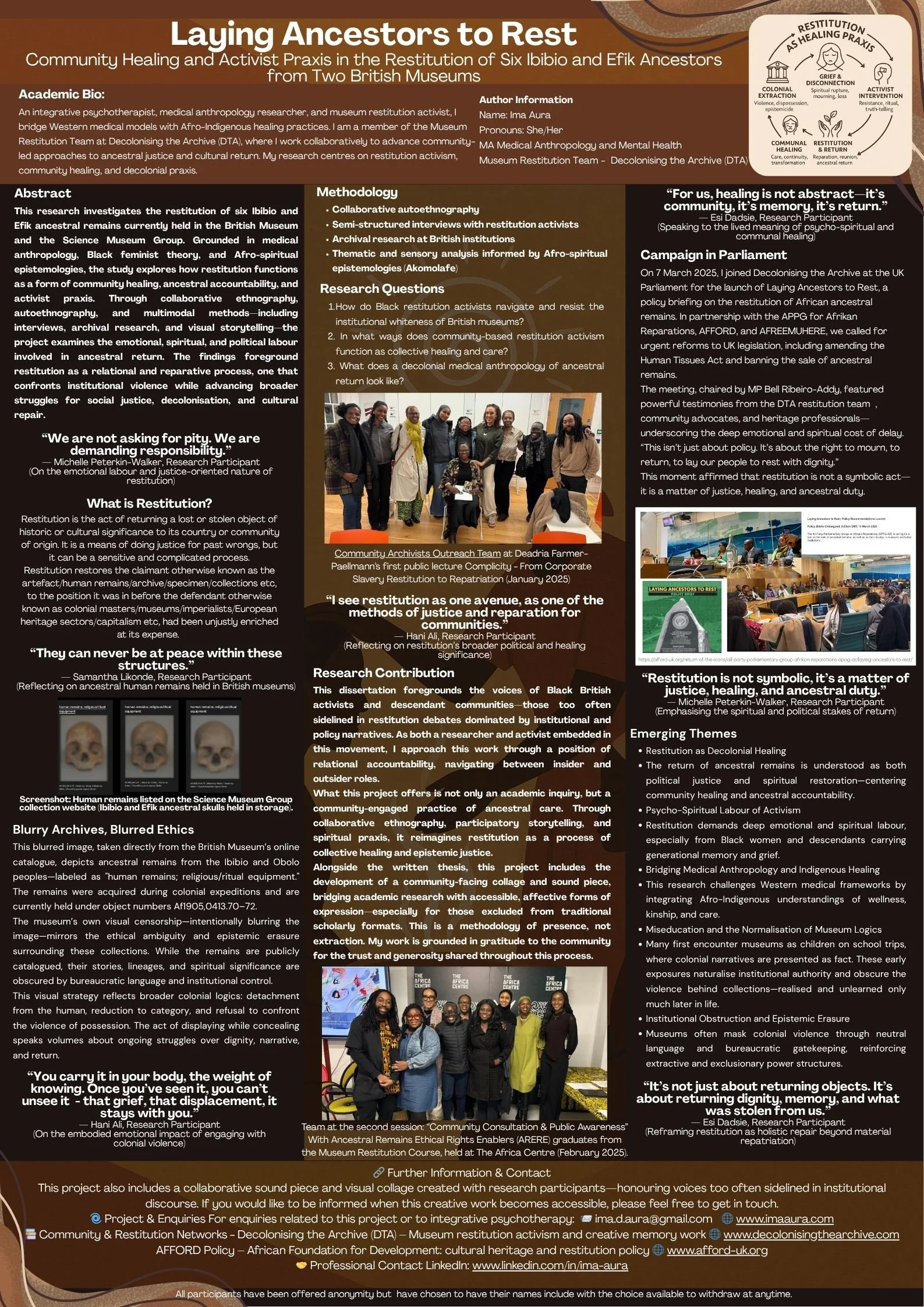
Restitution activism informs the method and ethics of Atlantic Calibration.
My MA research in Medical Anthropology and Mental Health examined community healing, activist praxis and the restitution of six Ibibio ancestors held across two British museums. That work opened a wider question about how descendants, communities and institutions carry the emotional, spiritual, political and historical weight of colonial remains, archival harm and institutional repair.
Atlantic Calibration extends this inquiry beyond the museum. It moves towards land, water, family archive, burial grounds, public memory, ritual, cultural repair, ontological justice and descendant led knowledge production.
This strand asks what repair requires when harm has been carried across generations, institutions and geographies. It also asks what communities need in order to continue this work without being depleted by it.
Earlier Archive Work
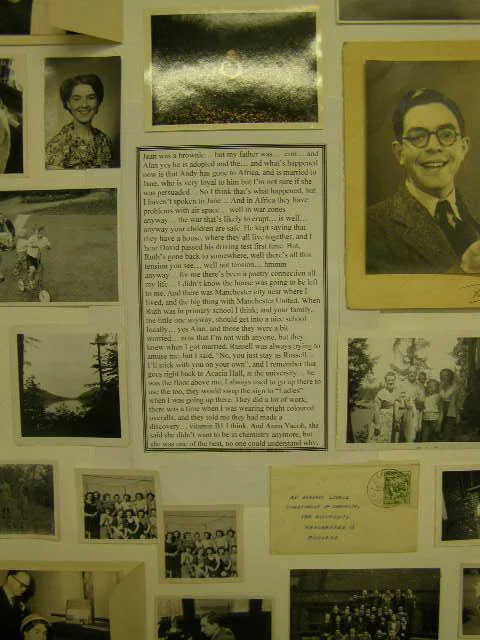
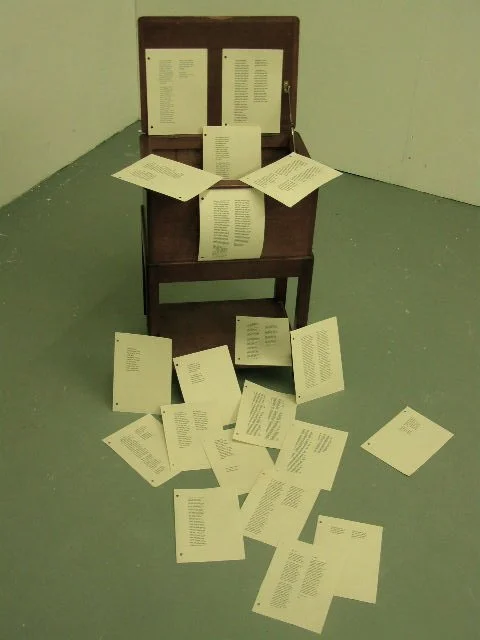
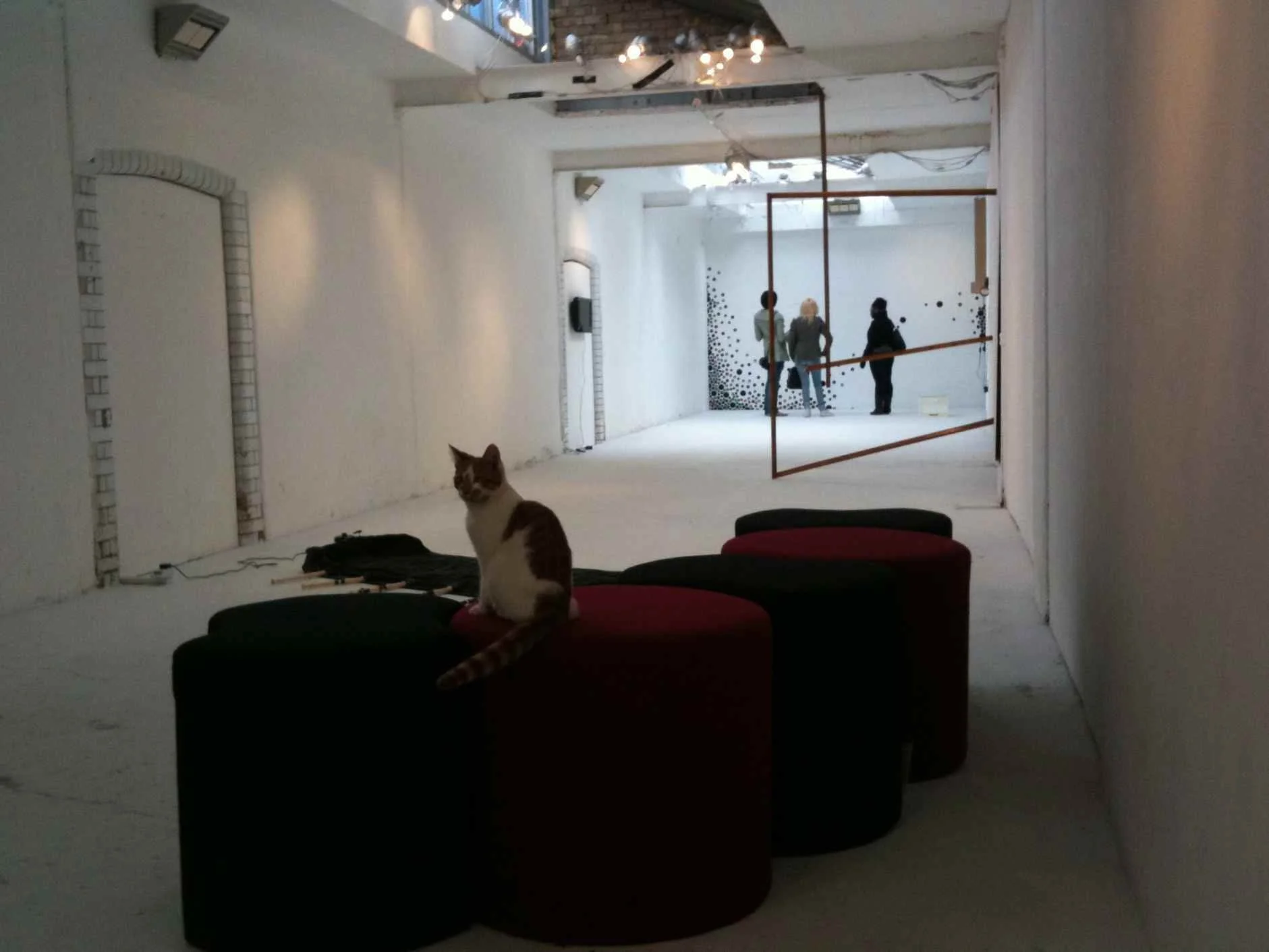
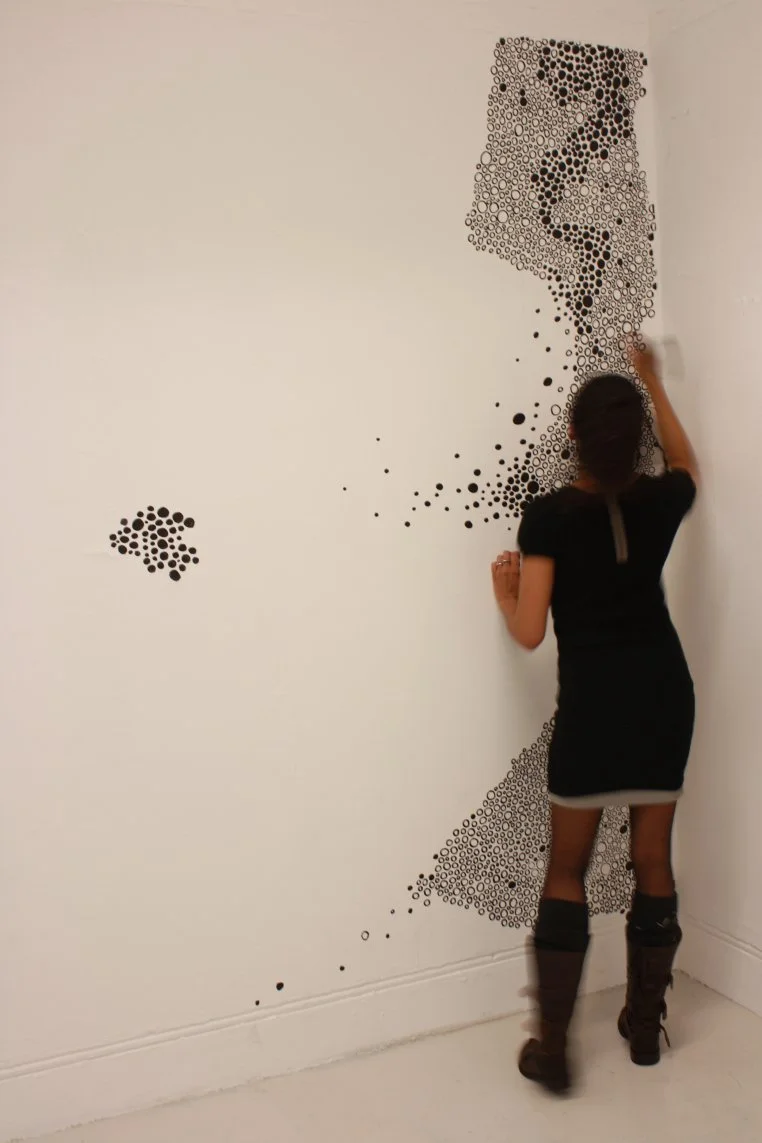
Atlantic Calibration is informed by almost two decades of art making, mixed media, installation, family archive work and embodied research.
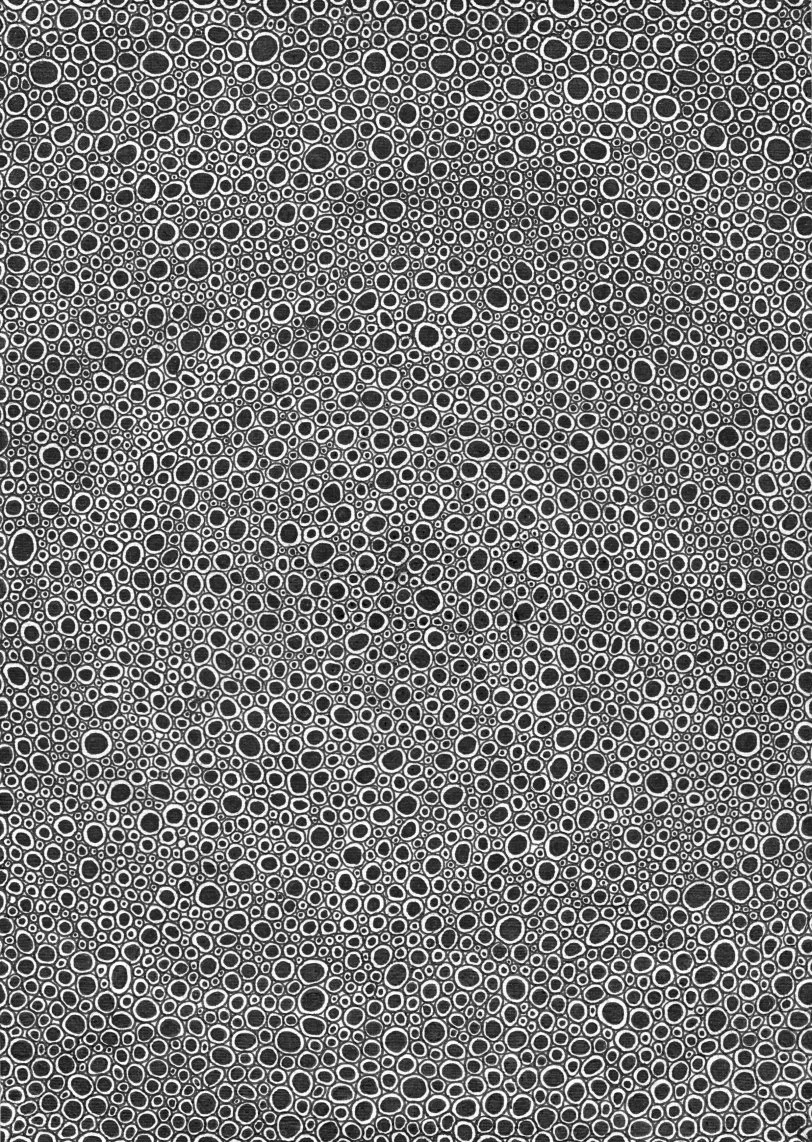
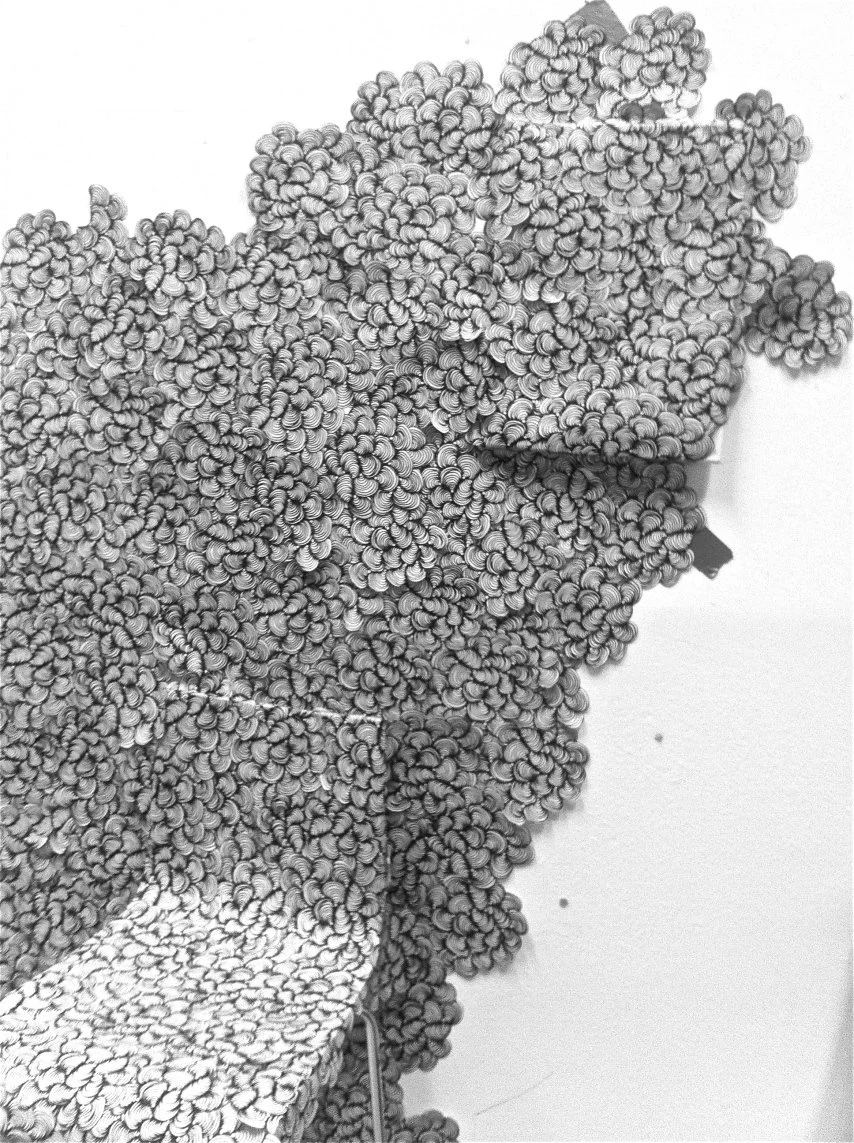
In earlier work from the 2010s, my practice circled questions of memory, repetition, mental health, inheritance, family records and the fragility of personal and family history.
Looking back, I understand these works as part of a longer thread. An ongoing inquiry into how memory, body, family and archive live together.
Atlantic Calibration extends this long standing practice into Black Atlantic memory, ancestry, site based research and living archive work.
Memory, Repetition and Family Archive
Before Atlantic Calibration had a name, my work was already circling memory, repetition, family history and the body.
Earlier works explored the marks we repeat, the records we keep, the stories we inherit and the things that become difficult to hold. Family photographs, handwritten notes, domestic objects and repeated gestures became ways of asking what memory does inside a life.
These works were often personal, but they were never only personal. They were early attempts to understand how family history, mental health, silence, care and survival move through generations.
I now understand this earlier practice as part of the foundation of Atlantic Calibration. A long process of learning how to listen to archive, image, body and inheritance.
Current Phase
Atlantic Calibration is moving from private gathering into public form.
The first site specific work, College Savannah Ancestral Lands: A Visual Pilgrimage Through Spiral Time, has been created from Barbados field footage, family photographs, memoir fragments, archival images, water offering, route tracing and embodied return.
This film opens the next stage of the archive. It does not conclude the research.
From here, Atlantic Calibration is developing towards further Barbados fieldwork, UK archival research, Nigeria research from 2027, artist talks, film screenings, workshops, heritage partnerships, community archive work and reparative cultural memory practice.
I am open to conversations, collaborations, partnerships, commissions, funding opportunities and reflections from people, communities and organisations who feel connected to the work.
For enquiries, invitations, feedback or conversation, please use the contact form.